
In cycling, we often talk about training, equipment, and performance. Far less frequently do we discuss the care of functional apparel, even though this is one of the aspects that most significantly influences the comfort and lifespan of the garments.
A piece of functional apparel doesn't break down because you use it too often.
It breaks down because it isn't properly cared for.
In this article, you will find a practical and concrete guide on how to care for your technical cycling apparel, avoid common mistakes, and preserve its properties in the long term.
Technical apparel is not "normal" clothing
Jerseys, cycling shorts, jackets, and functional underwear are designed to:
- handle large amounts of sweat
- maintain consistent elasticity
- ensure breathability and comfort during exertion
To achieve all of this, delicate fibers, special treatments, and constructions are used that are far more complex than those in casual wear.
This means only one thing:
👉 They need to be washed and cared for differently.
The real problem is sweat remaining in the fabric
Sweat contains mineral salts which, when they dry in the fibers:
- stiffen the fabrics
- reduce elasticity
- promote stubborn odors
The tighter fitting and more technical a garment is, the more important it is not to leave sweat in the fabric for too long.
Good habit
If you can't wash the garment immediately:
- rinse it with cold water
- let it air dry
- avoid leaving it damp in your bag or backpack
It's a simple measure, but it makes a big difference.
How to properly wash functional apparel
Temperature
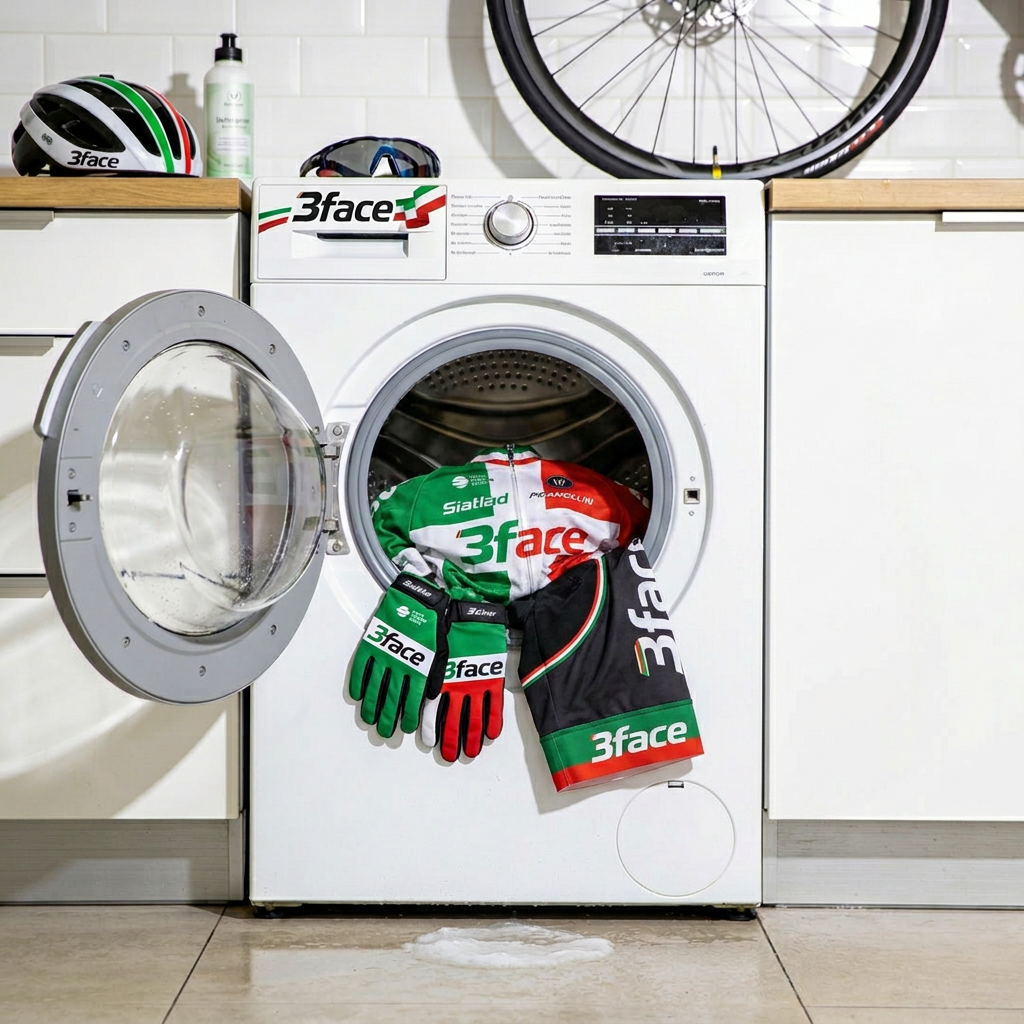
30 °C is perfectly sufficient.
Higher temperatures can damage elastic fibers and technical finishes.
Detergent
Use detergents that are:
- neutral
- specifically for sportswear
Avoid:
- fabric softeners
- aggressive or perfumed detergents
Fabric softener, in particular, impairs breathability by "sealing" the fibers.
How to load the washing machine
- Turn garments inside out
- Close zippers and velcro fasteners
- Try to wash garments with velcro fasteners separately or in a laundry bag
Velcro fasteners are a great invention, but when they come into contact with functional apparel, they tend to damage it easily.
Drying: More damage occurs here than you think
Many functional garments are damaged not by washing, but by drying.
Tumble dryers:
- better to avoid
Direct heat:
- impairs elasticity
- damages membranes and impregnations
- drastically shortens the garment's lifespan
The best solution is still:
👉 Air drying in a well-ventilated room
Direct sunlight:
- UV rays cause fabrics to fade and dry out
- It's best to dry in the shade, even if it takes a few hours longer
Storage: The detail that makes the difference
Before putting garments away for extended periods:
- wash them
- dry them completely
- check seams and stressed areas
How to store them
- lightweight garments: folded, without crushing
- functional jackets: hang on wide hangers
- dry and well-ventilated room
Putting away a dirty or damp garment means slowly ruining it, even without wearing it.
Why care also influences how I pedal
A well-maintained functional garment retains its breathable properties and elasticity for a long time, ensuring that the fit and comfort of the product remain unchanged.
Care is not just about longevity, but also about the quality the product can offer throughout its entire lifecycle.
Conclusion
Caring for functional apparel does not require complicated steps.
It just needs attention, consistency, and respect for materials designed to perform at their best.
If you treat your garments well, they will repay you on every ride.